Best Running Shoes for Navy PRT Training
How to choose a running shoe for 1.5-mile training, and five long-running shoe lines worth trying on.

Some links on NavyMentor are affiliate links. If you buy through one, we may earn a commission at no extra cost to you. It never changes what we recommend. How this works
In this guide
You do not need racing shoes to run a mile and a half. You need a comfortable pair that lets you train three times a week without shin, knee or foot pain. This guide explains how to choose, then lists five long-running shoe lines that are reliably good places to start.
These are research-based recommendations, not the result of lab testing, and shoes are personal: a model that suits one runner can be wrong for another. Our methodology explains how we choose.
How to choose a running shoe
- Comfort comes first. A shoe that feels right when you jog in it is a better guide than any feature list.
- Get the size right. Leave about a thumb’s width beyond your longest toe. Feet swell when you run, and many people need half a size up from their everyday shoes.
- Neutral or stability? Most runners do well in neutral shoes. If your arches collapse inward a lot, or you have been advised to, try a stability model.
- Shop late in the day and wear your running socks.
- Use a specialist running shop if you can. Many will watch you run and suggest suitable shoes at no charge.
At a glance
| Product | Best for | Key feature | Price level | Link |
|---|---|---|---|---|
| Best all-rounderBrooks Ghost | Most neutral runners | Balanced cushioning, easy fit | Mid-range | See on Amazon (opens in a new tab) |
| Best stabilityBrooks Adrenaline GTS | Runners who overpronate | Guided support without stiffness | Mid-range | See on Amazon (opens in a new tab) |
| Best cushionedHoka Clifton | Hard surfaces and sore joints | Soft, light and rockered | Mid-range | See on Amazon (opens in a new tab) |
| Best premium stabilityASICS Gel-Kayano | Heavier runners needing support | Maximum support and cushioning | Premium | See on Amazon (opens in a new tab) |
| Best for speed workSaucony Ride | Intervals and time trials | Firmer, more responsive feel | Mid-range | See on Amazon (opens in a new tab) |
Price level is a broad guide, not a live price. Scroll the table sideways on small screens.
The picks
Brooks Ghost
Mid-range
A neutral daily trainer that has been refined over many versions. It is neither especially soft nor especially firm, which is why it suits so many runners and is a common first recommendation in running shops.
Ideal for: Neutral runners who want one shoe for every session.
- Neutral support
- Moderate, balanced cushioning
- Available in several widths
- Durable outsole
What we like
- Comfortable for most foot shapes
- Wide range of sizes and widths
- Consistent from version to version
- Works for easy runs and faster ones
Trade-offs
- Not the lightest option
- Unexciting if you want a bouncy feel
- Full price is mid-range rather than cheap
Brooks Adrenaline GTS
Mid-range
The stability counterpart to the Ghost. It adds support along the sides of the midsole to limit excess inward roll, without the hard, rigid feel older stability shoes were known for.
Ideal for: Runners with flatter arches or noticeable overpronation.
- Stability support
- Moderate cushioning
- Available in several widths
- Durable outsole
What we like
- Support that does not feel intrusive
- Good width options
- Long-established and predictable
Trade-offs
- Slightly heavier than neutral shoes
- Unnecessary if you do not need support
- Less lively for fast running
Hoka Clifton
Mid-range
A thick, soft midsole in a surprisingly light shoe, with a curved sole that helps you roll forward. Popular with runners who train on pavement or find firmer shoes hard on their joints.
Ideal for: Runners who want maximum cushioning for training on hard surfaces.
- Neutral support
- High, soft cushioning
- Rockered sole
- Lightweight for its size
What we like
- Very comfortable on pavement
- Light despite the thick sole
- Smooth, rolling ride
Trade-offs
- Soft foam can wear faster than firmer shoes
- Tall sole feels unusual at first
- Narrower fit in standard width
ASICS Gel-Kayano
Premium
ASICS’ long-running flagship stability shoe, combining substantial support with plenty of cushioning. It costs more than the others here, and suits runners who want the most protection.
Ideal for: Heavier runners and those who need strong stability support.
- Stability support
- High cushioning
- Structured, secure upper
- Durable construction
What we like
- Very supportive and protective
- Plush underfoot
- Built to last
Trade-offs
- The most expensive pick
- Heavier than the alternatives
- More shoe than many runners need
Saucony Ride
Mid-range
A neutral trainer with a slightly firmer, quicker feel than the Ghost. It handles interval sessions and time trials well while remaining comfortable enough for easy days.
Ideal for: Neutral runners who want a livelier shoe for faster sessions.
- Neutral support
- Moderate, responsive cushioning
- Lighter than many daily trainers
- Durable outsole
What we like
- Responsive at faster paces
- Versatile across session types
- Good value when discounted
Trade-offs
- Firmer feel is not for everyone
- Less cushioned than the softest shoes on long runs
Making your shoes last
Shoes are only part of it. Follow our 8-week 1.5-mile run plan, set your targets with the pace calculator, and read how the Navy PRT works.
Frequently asked questions
Do I need expensive shoes to pass the PRT?
No. A comfortable, properly fitting pair of running shoes is enough. Last year’s version of a good model is often the best value.
Can I bring my own running shoes to boot camp?
Follow your recruiter’s current instructions and Recruit Training Command’s guidance. Train in proper running shoes beforehand either way.
How do I know if I need stability shoes?
A running shop can watch you run and advise. Signs include heavy wear on the inner edge of your soles and arches that collapse inward.
Are there rules about shoe colors in uniform?
Physical training uniform rules are set out in Navy uniform regulations and by your command. Check before buying anything brightly colored for official PT.
Sources
Facts last checked against these sources: October 2026.
- Manufacturer specifications from Brooks, Hoka, ASICS and Saucony for each shoe line listed.
- Recruit Training Command — FAQ, which includes guidance on running shoes for recruits.
More like this
Keep reading
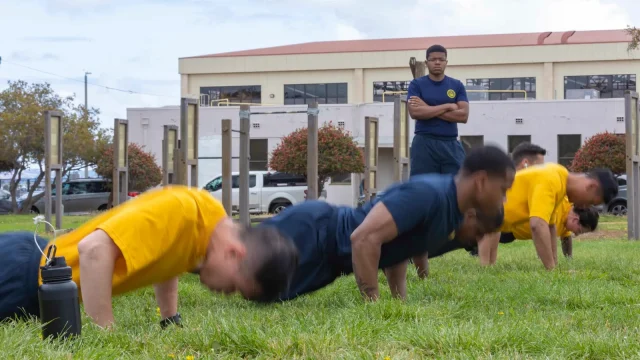
Navy PRT Explained: Events, How Scoring Works and How to Prepare
What the Physical Readiness Test involves, how it fits into the fitness assessment, what changed for 2026, and how to…
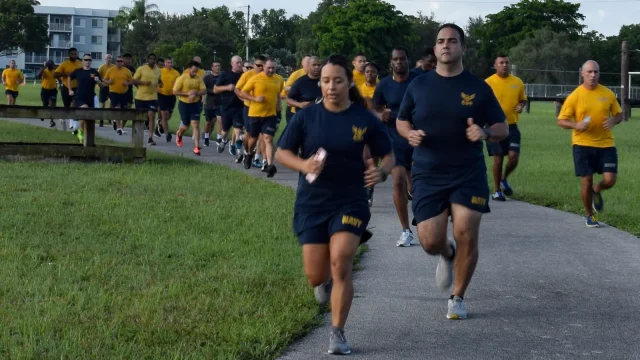
An 8-Week Training Plan for the Navy 1.5-Mile Run
Three runs a week, built around easy mileage, intervals and a weekly time trial — with a pace calculator to…
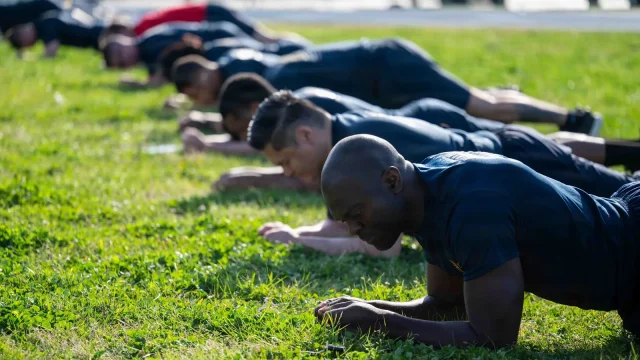
How to Improve Your Push-Ups and Forearm Plank for the Navy PRT
Technique that counts, the mistakes that cost repetitions, and a simple six-week progression for both events.