How to Join the Navy: Requirements and Steps Explained
From the first recruiter conversation to the day you ship: what the Navy looks at, the steps in order, and where to confirm the current rules.
In this guide
Most of the anxiety around joining comes from not knowing what happens next. The process is more structured than it looks from the outside, and at almost every stage you can stop and ask questions before committing. This guide walks through it in order.
What the Navy looks at
Recruiters screen applicants in a handful of areas. None of them is a mystery, but the thresholds move with policy and recruiting needs.
- Age. Federal law sets the minimum enlistment age at 17, with parental consent required for 17-year-olds. Each service sets its own upper limit within the law; the Navy has accepted enlisted applicants into their early forties in recent years. Officer programs have their own, usually lower, limits.
- Citizenship. You generally need to be a U.S. citizen or a lawful permanent resident. Some ratings and all officer programs require citizenship because of security clearances.
- Education. A high school diploma is the standard route. Rules for applicants with a GED or without a diploma have changed more than once recently, usually tied to a higher required test score.
- ASVAB score. You need a qualifying score on the Armed Services Vocational Aptitude Battery. Your results also decide which jobs are open to you. See our guide to the ASVAB for the Navy.
- Medical and physical standards. A full medical exam at MEPS checks height and weight, vision, hearing and your medical history. Some conditions are disqualifying; others can be waived.
- Background. Criminal history, drug use and some financial problems are reviewed. Many issues are not automatic disqualifiers, but they may need a waiver.
- Dependents. Single parents and applicants with several dependents may need a waiver or additional paperwork.
The steps, in order
1. Talk to a recruiter
The first conversation is a screening, not a commitment. A recruiter asks about your education, health, legal history and goals, and tells you whether it is worth continuing. Bring questions. Be completely honest — problems disclosed up front can often be worked through, while problems discovered later can end an enlistment.
2. Take the ASVAB
You may already have a score from a test taken at school. If not, the recruiter schedules one. Your result has two jobs: it determines whether you can enlist, and it determines which ratings you can be offered.
3. Go to MEPS
At the Military Entrance Processing Station you have a medical examination, complete background paperwork and, if you have not already, take the ASVAB. It is a long day, sometimes two. Everything you tell the medical staff should match what you told your recruiter.
4. Choose a rating and sign a contract
A classifier shows you the ratings you qualify for that are available at that time. This is the moment to slow down. Ask about the length of training, where the job is based, sea and shore rotation and advancement. Our Navy Career Explorer gives you an overview of the fields before you get there.
Every first enlistment carries a total military service obligation of eight years under federal law. How much of that is active duty depends on the program you sign for; the remainder is served in the reserve.
5. Take the oath and wait to ship
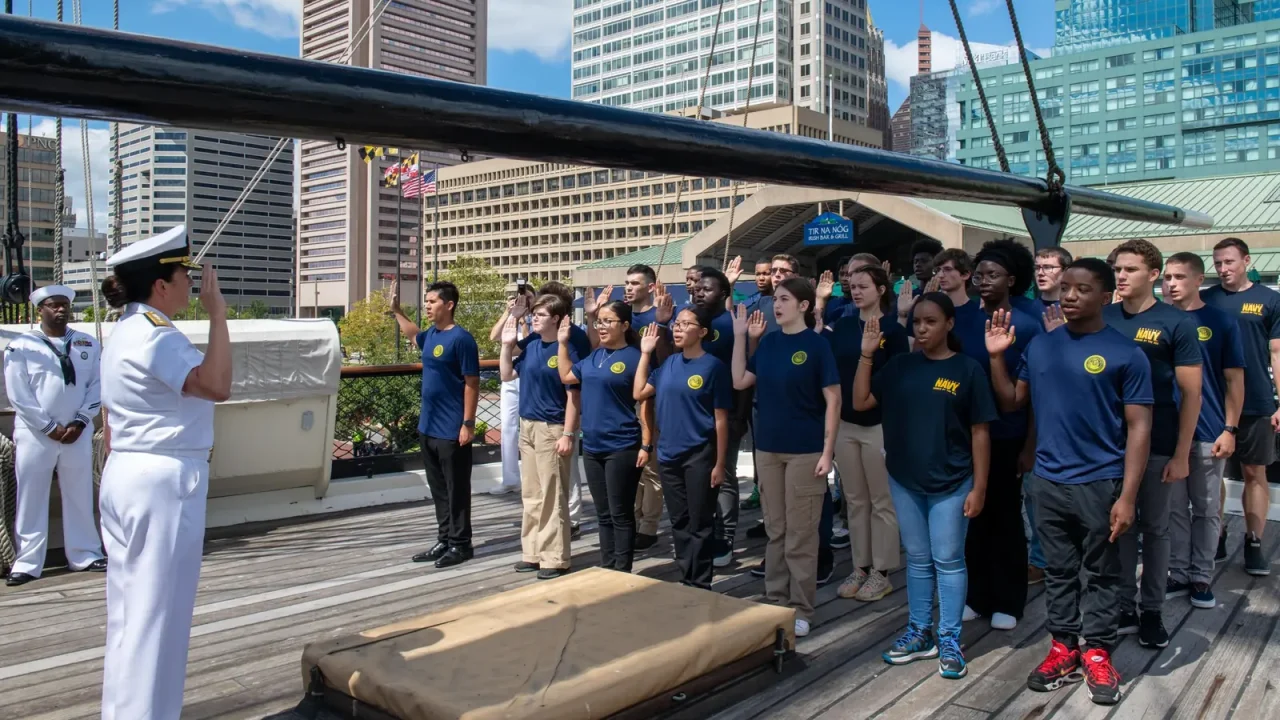
After signing you take the oath of enlistment and enter the Delayed Entry Program as a future sailor. The wait before shipping can be days or many months. Use it: get fit, learn the required knowledge and sort out your paperwork. Our Ready-to-Ship checklist covers what to do.
6. Ship to boot camp
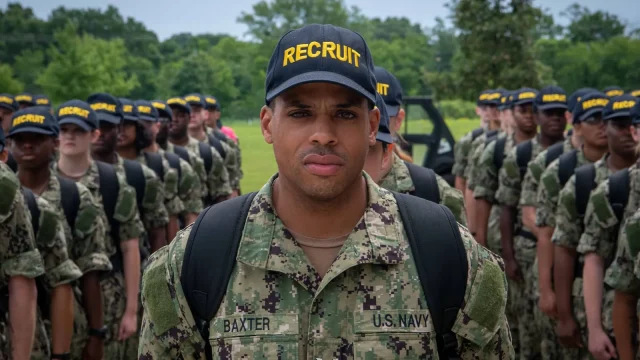
All enlisted sailors begin at Recruit Training Command in Great Lakes, Illinois — the Navy’s only boot camp. Training lasts roughly nine weeks plus in-processing days. Read what happens week by week and what to bring.
Enlisted or officer?
Enlisted sailors make up most of the Navy and specialise in a rating. Officers lead divisions and departments and generally need a bachelor’s degree. The main commissioning routes are the U.S. Naval Academy, Naval Reserve Officers Training Corps (NROTC) at civilian universities, and Officer Candidate School in Newport, Rhode Island, for people who already hold a degree. Enlisted sailors can also apply for commissioning programs later in their careers.
How to prepare while you decide
Frequently asked questions
Can I choose my job before I sign?
You choose from the ratings you qualify for that are available when you are at MEPS. If the job you want is not open, you can ask about waiting for it. Do not sign for a rating you do not want on the assumption that you can easily change later.
Does talking to a recruiter commit me to anything?
No. You are not committed until you sign a contract and take the oath, and even then there is a process before you ship. Ask everything you want to ask first.
How long does the whole process take?
It varies widely. Some people ship within weeks of their first recruiter visit; others wait months for a specific rating, a waiver or a school date.
Is NavyMentor a recruiter?
No. NavyMentor is an independent publication with no connection to Navy Recruiting Command. Only a Navy recruiter can confirm your eligibility or start an application.
Sources
Facts last checked against these sources: October 2026.
- Navy.com — official recruiting site: current requirements, careers and recruiter contact.
- Recruit Training Command — Recruits — official boot camp schedule and reporting guidance.
- 10 U.S. Code § 505 — statutory enlistment age limits.
- 10 U.S. Code § 651 — the eight-year military service obligation.
- Official ASVAB program — how the test is scored.
More like this
Keep reading

Navy Boot Camp Packing List: What to Bring and What to Leave at Home
The official Recruit Training Command list in plain English — required documents, permitted items, and everything that gets boxed up…

ASVAB for the Navy: How Scores Work and How to Prepare
The difference between your AFQT and your line scores, why both matter for the job you get, and a study…
Navy Boot Camp: What to Expect, Week by Week
From the night of arrival to Pass-in-Review: how the roughly nine weeks at Recruit Training Command are structured and how…