An 8-Week Training Plan for the Navy 1.5-Mile Run
Three runs a week, built around easy mileage, intervals and a weekly time trial — with a pace calculator to set your targets.
In this guide
The 1.5-mile run is short enough to hurt and long enough to punish bad pacing. It responds very well to consistent, unglamorous training. This plan assumes you can already jog for about 15 minutes without stopping. If you cannot yet, spend two or three weeks alternating jogging and walking until you can, then start at week one.
The three kinds of run
- Easy run. Slow enough to hold a conversation. It should feel almost too easy. This is where your aerobic base is built.
- Intervals. Short, fast repeats with recovery in between, run at or slightly quicker than your goal pace. These teach your body what test pace feels like.
- Steady run or time trial. Sustained effort that is comfortably hard, or a full 1.5-mile test to measure progress.
Set your target lap times with the 1.5-mile run pace calculator. On a standard 400 m track, 1.5 miles is just over six laps.
The 8-week plan
Leave at least one day between runs. Begin every session with five to ten minutes of easy jogging and finish with five minutes of walking.
| Week | Run 1 — easy | Run 2 — intervals | Run 3 — steady or test |
|---|---|---|---|
| 1 | 20 min easy | 6 × 400 m at goal pace, 90 sec walk between | 1.5-mile time trial (your baseline) |
| 2 | 22 min easy | 8 × 400 m at goal pace, 90 sec walk | 15 min steady |
| 3 | 25 min easy | 4 × 800 m at goal pace, 2 min jog | 18 min steady |
| 4 | 25 min easy | 8 × 400 m slightly faster than goal pace, 90 sec walk | 1.5-mile time trial |
| 5 | 28 min easy | 5 × 800 m at goal pace, 2 min jog | 20 min steady |
| 6 | 30 min easy | 3 × 1,200 m at goal pace, 3 min jog | 20 min steady |
| 7 | 30 min easy | 6 × 400 m faster than goal pace, 2 min walk | 1.5-mile time trial |
| 8 | 20 min easy | 4 × 400 m at goal pace, full recovery | Rest two days, then test |
How to pace the test
- Run the first lap at goal pace, not faster. Adrenaline makes the first lap feel easy. The seconds you gain there cost you far more later.
- Hold steady through laps two to four. Check your watch each lap against your target split.
- Work on lap five. This is where most people slow down without noticing.
- Use whatever is left on the last lap.
What to add alongside the running
- Push-ups and planks two or three times a week — they are tested too. See how to improve both.
- Two rest days a week. Fitness is built during recovery.
- Sleep. It is the most effective recovery tool there is.
- Shoes that fit. Worn-out shoes are a common cause of shin and knee pain. See our guide to running shoes for PRT training.
Frequently asked questions
What is a good 1.5-mile run time for the Navy?
Standards depend on your age and sex, and they were updated for 2026. Check the current Physical Readiness Program guide from MyNavy HR for the time that applies to you.
Can I train on a treadmill?
Yes. Set a slight incline of about one percent to make it closer to running outdoors, and do at least a few runs outside before your test.
How quickly will I improve?
Beginners often see clear improvement within four weeks. Progress slows as you get fitter, which is normal.
What if I get shin pain?
Reduce your running, check your shoes and avoid adding distance and speed in the same week. If the pain persists or is sharp, see a medical professional.
More like this
Keep reading
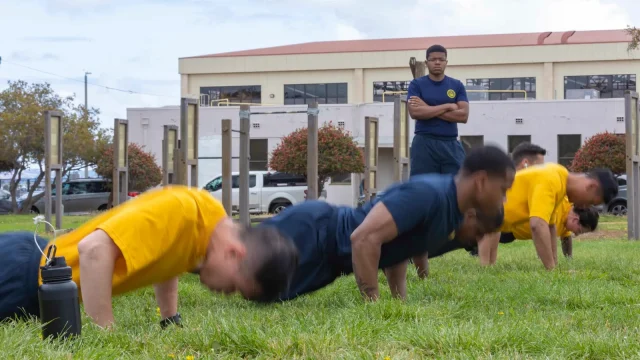
Navy PRT Explained: Events, How Scoring Works and How to Prepare
What the Physical Readiness Test involves, how it fits into the fitness assessment, what changed for 2026, and how to…
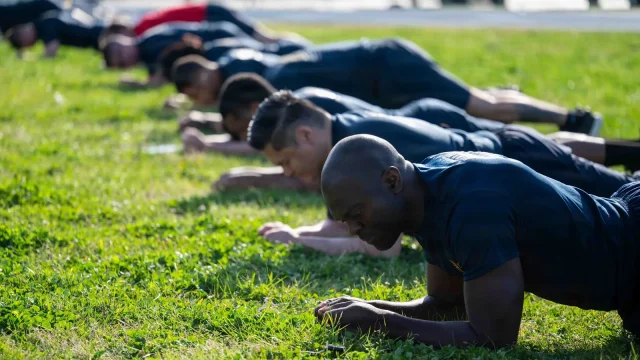
How to Improve Your Push-Ups and Forearm Plank for the Navy PRT
Technique that counts, the mistakes that cost repetitions, and a simple six-week progression for both events.

Best Running Shoes for Navy PRT Training
How to choose a running shoe for 1.5-mile training, and five long-running shoe lines worth trying on.