NAVADMIN 283/13 Explained: The Navy EOD Retention Bonus Then and Now
NAVADMIN 283/13 renewed a retention bonus for senior Navy EOD technicians in 2013. Here is what it said, what replaced it, how EOD bonuses work today, and what the EOD fitness test requires.
Some links on NavyMentor are affiliate links. If you buy through one, we may earn a commission at no extra cost to you. It never changes what we recommend. How this works
In this guide
NAVADMIN 283/13 was a 2013 Navy message that renewed a retention bonus for senior enlisted bomb-disposal experts. It offered Master Explosive Ordnance Disposal (EOD) Technicians up to $150,000 to stay in the Navy past 19 years of service. It is no longer in force. The program it renewed still exists, but under a newer message with different rules and amounts.
If you landed here looking for that old message, you are in the right place. This guide explains what NAVADMIN 283/13 said, what replaced it, and how Navy EOD bonuses work today.
We also cover the part most people really want to know: what Navy EOD is, how hard it is to get in, and what the fitness test asks of you. Every number below comes from an official Navy document, and each one is linked at the end. 💣
What is a NAVADMIN?
A NAVADMIN is a Navy administrative message. It is how Navy headquarters announces a policy to the whole fleet. Each message gets a number and a year. So “283/13” simply means it was the 283rd NAVADMIN released in 2013.
NAVADMINs cover everything from uniform changes to pay. They stay in force until another message cancels or replaces them. That is why an old message number can still turn up in search results years after the rules have moved on.
Look for the words cancels or supersedes in newer messages on the same subject. If a later message cancels yours, the old one is history. For EOD bonuses, the Navy’s EOD community page always links the message that is in force.
What NAVADMIN 283/13 said
The message was released on 30 October 2013 by the Chief of Naval Personnel. Its full title was “Renewal of Naval Special Operations Enlisted Explosive Ordnance Disposal (EOD) Technician Critical Skills Retention Bonus Program.”
In plain English: the Navy was worried about losing its most experienced EOD technicians just as they became eligible to retire. So it offered them a large lump sum to sign on for a few more years.
Who could get it
- Master EOD Technicians. The message named NEC 5337, the code then used for that qualification.
- Pay grades E-7 to E-9. That means chief, senior chief and master chief petty officers.
- 19 to 22 years of active service. You could sign in your 18th year, but payment did not start before year 19.
- Active duty, regular Navy, with a favourable recommendation from the commanding officer.
- A commitment of at least three years.
How much it paid
| Contract length | First (initial) contract | Later (subsequent) contract |
|---|---|---|
| 2 years | Not offered | $40,000 |
| 3 years | $60,000 | $60,000 |
| 4 years | $80,000 | Not offered |
| 5 years | $120,000 | Not offered |
| 6 years | $150,000 | Not offered |
Source: NAVADMIN 283/13, paragraph 4. These are the 2013 amounts and are shown for reference only.
The small print that mattered
- Paid as a lump sum from the date the contract took effect.
- A career cap of $200,000 in retention or continuation bonuses. Ordinary reenlistment bonuses did not count toward that cap.
- No payment past 25 years of service, and none past your high year tenure date.
- Apply 60 to 180 days ahead through the chain of command.
- Pay it back if you leave early. A sailor who did not finish the agreed service could be made to repay the unearned part.
A retention bonus is not a thank-you for past service. It is payment in advance for years you have not served yet — and the Navy can ask for it back.
Is NAVADMIN 283/13 still in effect?
No. It has been replaced, and more than once.
NAVADMIN 283/13 itself replaced an older message from 2007. By 2022 the program was known simply as the Retention Bonus, and NAVADMIN 222/22 renewed it. Then, in October 2025, NAVADMIN 212/25 cancelled the 2022 message and set out the program that applies today. The table shows the messages named in the documents we read; there may have been others in between.
| Message | Date | What it did |
|---|---|---|
| NAVADMIN 102/07 | April 2007 | Announced the EOD Critical Skills Retention Bonus |
| NAVADMIN 283/13 | October 2013 | Renewed the program and replaced the 2007 message |
| NAVADMIN 222/22 | October 2022 | Renewed the senior enlisted EOD Retention Bonus |
| NAVADMIN 212/25 | October 2025 | Cancelled the 2022 message; the current program |
On top of the NAVADMIN, the EOD community manager publishes a short set of business rules. These can be updated at any time. The version posted on the Navy’s EOD community page when we checked was dated 23 April 2026.
The EOD retention bonus today
Today’s program keeps the same basic idea but changes almost every detail. The biggest change is that it now reaches much later into a career.
Who can apply
- EOD sailors holding NEC M04A (Master EOD Technician).
- Pay grades E-7 to E-9.
- Between 20 and 28 years of active service.
- Active duty, regular Navy, with the commanding officer’s recommendation.
- The business rules add a promotion recommendation of 3.0 or above and no disciplinary action in the past 36 months.
The three phases
| Phase | Who | Years of service covered | Amount per year | Most you can earn in the phase |
|---|---|---|---|---|
| Phase one | E-7 and above | 20 to 24 | $25,000 | $100,000 |
| Phase two | E-8 (select) and above | 24 to 26 | $25,000 | $50,000 |
| Phase three | E-9 (select) and E-9 | 26 to 30 | $10,000 | $40,000 |
Source: NAVADMIN 212/25, paragraph 5, and the EOD Retention Bonus Business Rules dated 23 April 2026.
Phases can be combined if you are eligible for all the years covered. Contracts run from three to six years. The most a single contract can pay is a $150,000 lump sum for six years.
2013 compared with today
| NAVADMIN 283/13 (2013) | NAVADMIN 212/25 (today) | |
|---|---|---|
| Name | Critical Skills Retention Bonus | Retention Bonus |
| Qualification | NEC 5337 | NEC M04A |
| Pay grades | E-7 to E-9 | E-7 to E-9 |
| Years of service | 19 to 22 to start; paid up to year 25 | 20 to 28 to start; paid up to year 30 |
| How it is worked out | A fixed sum for each contract length | A set amount for each year, in three phases |
| Largest single award | $150,000 for six years | $150,000 for six years |
| Career cap | $200,000, not counting reenlistment bonuses | $480,000, counting reenlistment bonuses |
| Shortest contract | Three years (two for a later contract) | Three years |
The NAVADMIN says plainly that eligibility can be adjusted at any time through the business rules. Treat the numbers above as a snapshot from October 2026, not a promise.
The other EOD bonus: the Selective Reenlistment Bonus
The retention bonus above is only for the most senior technicians. Earlier in a career, the bonus that matters is the Selective Reenlistment Bonus (SRB). This is paid when you reenlist in a skill the Navy is short of.
SRB levels are set by skill and by how long you have served. The Navy groups service into zones:
- Zone A: roughly your first six years.
- Zone B: six to ten years.
- Zone C: ten to fourteen years.
The Navy’s EOD community page posts the current SRB levels for EOD. The table below shows the levels listed as effective 8 October 2026.
| Qualification | Zone A | Zone B | Zone C |
|---|---|---|---|
| Basic EOD Technician (M02A) | Up to $60,000 | Up to $60,000 | None listed |
| Senior EOD Technician (M03A) | Up to $75,000 | Up to $90,000 | Up to $60,000 |
| Master EOD Technician (M04A) | None listed | Up to $100,000 | Up to $100,000 |
Source: “SRB Award Levels (Effective 08 Oct 26)”, MyNavy HR EOD community page. These are award ceilings. What a sailor actually receives depends on pay, the length of the reenlistment and the award level in force on the day.
EOD technicians may also qualify for special and incentive pays tied to diving, demolition and parachute duty, depending on their assignment. These are separate from any bonus. Your command’s pay office can tell you what applies to you.
How a retention bonus really works
The amounts get the headlines, but the mechanics matter more. Here is what to understand before you sign anything.
- It is a contract. You agree to serve a set number of extra years. The Navy agrees to pay a set amount.
- It usually means reenlisting. Enlisted sailors must reenlist or extend so that their service runs to the end of the bonus contract.
- It is paid as a lump sum. The money arrives in one payment, not spread over the years.
- It is normally taxed. A large lump sum can mean a large tax bill. The rules can differ if you reenlist in a designated combat zone.
- It can be recouped. If you do not complete the service you agreed to, you may have to repay the unearned part.
- It does not override high year tenure. You cannot be paid for years past the date the Navy requires you to leave.
A bonus should be one factor, not the only one. Weigh it against family plans, health, retirement pay and what you want to do next. A financial counselor at your Fleet and Family Support Center can help for free.
What is Navy EOD?
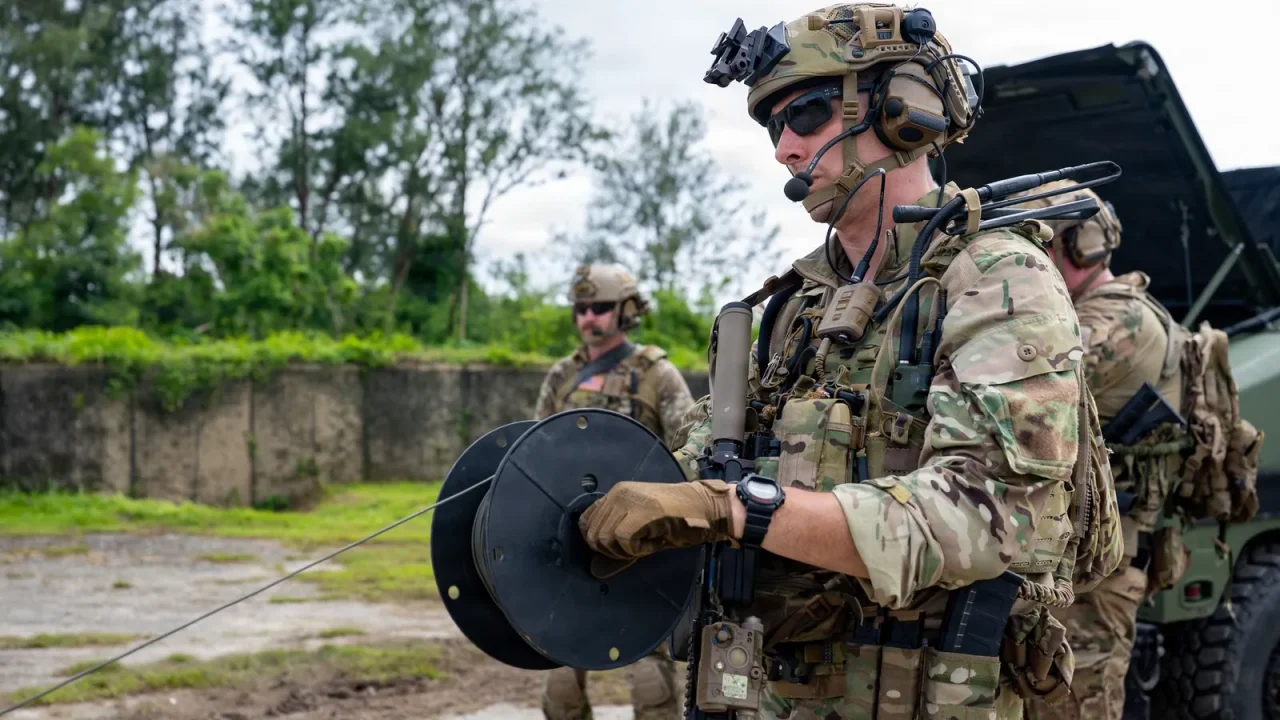
EOD stands for Explosive Ordnance Disposal. Navy EOD technicians find, identify, make safe and dispose of explosive hazards. That includes conventional bombs and shells, underwater mines, improvised devices, and chemical, biological and nuclear weapons.
What sets Navy EOD apart from the other services is the water. Navy technicians are also trained divers. They clear mines and work on explosive hazards under the sea. Many are also parachute-qualified.
They work with carrier and expeditionary strike groups, mine countermeasures forces, Naval Special Warfare and Army special operations forces. They also help federal, state and local law enforcement.
The EOD qualification ladder
| NEC code | Qualification | In plain English |
|---|---|---|
| M00A | EOD apprentice | In or just out of the training pipeline |
| M02A | Basic EOD technician | A qualified member of a team |
| M03A | Senior EOD technician | An experienced technician who can lead a team |
| M04A | Master EOD technician | The top qualification — the level the retention bonus targets |
Source: MILPERSMAN 1220-200, paragraph 5.
How to become a Navy EOD technician
There are two ways in. You can sign up for EOD when you first join the Navy. Or, if you are already serving, you can apply to convert from another job.
The training pipeline
The Navy’s own personnel manual lists the courses every EOD technician completes:
- EOD Preparatory Course. Physical conditioning, with a heavy focus on swimming.
- EOD Assessment and Selection Course. A screening stage to see who is ready for what follows.
- EOD Dive School. Learning to dive and to work safely under water.
- Joint EOD (Common Core). The main EOD school, shared with the other services, where students learn to make each type of ordnance safe.
- EOD Basic Navy (Underwater). The Navy-only portion that covers underwater ordnance.
Public descriptions of the pipeline also include a basic parachute course and tactical training before a new technician reaches a unit. From start to finish, expect it to take about a year. Many candidates do not finish — the Navy’s own manual describes it as high-risk training with a high attrition rate.
Moving across from another Navy job
If you are already in the Navy, the personnel manual sets out who can apply to convert to EOD. The main points are:
- You must be on active duty.
- Age 30 or under when your application arrives.
- Pay grades E-1 to E-5.
- Six years of active service or less.
- A qualifying ASVAB score.
- You must meet diving medical standards and take a pressure test.
- You owe 48 months of service from the day you graduate.
Several of these can be waived. When we checked in October 2026, the EOD community page said that time-in-service and rank waivers, up to E-6, were being considered. Its advice was not to rule yourself out before speaking to the community manager.
The EOD fitness test: the Physical Screening Test
Before anything else, you have to pass the Physical Screening Test, or PST. It is five events, done one after another, in this order:
- 500-yard swim, using sidestroke or breaststroke. Then a 10-minute rest.
- Push-ups, as many as you can in two minutes. Then a 2-minute rest.
- Curl-ups, as many as you can in two minutes. Then a 2-minute rest.
- Pull-ups, as many as you can with no time limit. Then a 10-minute rest.
- 1.5-mile run.
The minimum scores for EOD
| Event | To get a first contract | To convert from the fleet, and to stay in the pipeline |
|---|---|---|
| Push-ups | 50 | 50 |
| Curl-ups | 50 | 50 |
| Pull-ups | 6 | 6 |
| Swim (500 yards) | No slower than 12:30 | No slower than 12:30 |
| Run (1.5 miles) | No slower than 12:30 | No slower than 12:30 |
| Swim and run added together | 23:00 or less | 21:46 or less |
Source: Bureau of Naval Personnel memorandum of 2 June 2025, “Temporary Change to the Navy Explosive Ordnance Disposal Physical Screening Test Standards for Enlisted Candidates”, read together with MILPERSMAN 1220-410. The memorandum stays in effect until it is withdrawn or the manual is updated.
Notice how the swim and run work together. Scoring 12:30 on both would give you 25:00, which is a fail. You need to be well under the limit on at least one of them.
The Navy’s manual says candidates should aim for “significantly more” than the minimum. People who arrive at training able to do only the minimum tend to struggle. Treat these numbers as the floor.
Swim rules worth knowing
- The swim is done in a 25 or 50 yard or metre pool.
- Only sidestroke or breaststroke is allowed for EOD candidates, with no overhand recovery.
- You may push off the wall at each turn.
- Goggles or a face mask are allowed. Fins, swim caps, ear plugs and wetsuits are not.
- You may rest by floating or treading water, but you may not stand on the bottom or hold the side.
For help with the run, see our 1.5-mile run training plan. For push-ups, see how to improve your push-ups.
Real-life situations
1. You found an old message and wonder if it still applies
It almost certainly does not. Check the Navy’s EOD community page for the current NAVADMIN and business rules, and use those.
2. You are a senior EOD chief weighing a contract
Work out exactly which years your contract would cover and which phase each year falls in. Check your high year tenure date first, because no payment is made past it. Then get a second opinion on the tax effect of a lump sum.
3. You are a junior sailor thinking about converting
Take a practice PST honestly, with someone timing you. Then tell your detailer you plan to apply. The EOD community page stresses doing this before you are under orders.
4. You are a civilian thinking about joining for EOD
Start swimming now. The swim is where most strong runners come unstuck. A recruiter can explain the current contract options. Our guide to how to join the Navy covers the first steps.
5. You are a family member trying to understand a bonus offer
Ask three questions: how many more years, how much after tax, and what happens if plans change. Those three answers tell you most of what you need to know.
Common mistakes (and the fix for each)
⚠️ Mistake: Relying on an old NAVADMIN.
✅ Fix: Check for a newer message that cancels it. For EOD, use the community page.
⚠️ Mistake: Treating the headline figure as take-home pay.
✅ Fix: Bonuses are normally taxed. Plan around the after-tax amount.
⚠️ Mistake: Mixing up the retention bonus and the reenlistment bonus.
✅ Fix: The retention bonus is for Master EOD Technicians late in a career. The SRB applies much earlier.
⚠️ Mistake: Forgetting that a bonus can be recouped.
✅ Fix: If you do not finish the contract, you may have to repay the unearned part.
⚠️ Mistake: Training only for the PST minimums.
✅ Fix: Aim well above them. The minimum gets you in the door, not through the course.
⚠️ Mistake: Practising the swim with freestyle.
✅ Fix: EOD candidates must use sidestroke or breaststroke. Train the stroke you will be tested on.
⚠️ Mistake: Ignoring the combined swim-and-run limit.
✅ Fix: Passing each event alone is not enough. Add your two times together.
Pro tips
- Read the source. NAVADMINs are short. Ten minutes with the real message beats an hour of forum posts.
- Save a copy. Keep the message and business rules that were in force on the day you signed.
- Talk to your career counselor early. Timing a reenlistment around a bonus window takes planning.
- Train the swim first. It takes longest to improve and counts toward the combined time.
- Practise the test in order. Doing pull-ups after a swim, push-ups and curl-ups feels very different.
- Ask about waivers. Age, rank and time-in-service limits are often waiverable.
Training gear for the Physical Screening Test
You do not need much kit to train for the PST: somewhere to swim, somewhere to run, and a bar to pull up on. These three picks cover the gaps most people have at home. We chose them by researching what each one does and who it suits. We have not tested them hands-on, and we list the trade-offs. Read how we choose products.
| Product | Best for | Key feature | Price level | Link |
|---|---|---|---|---|
| Best training planThe Complete Guide to Navy SEAL Fitness (3rd Edition) | A structured swim, run and calisthenics programme | Written by a former Navy SEAL | Budget | See on Amazon (opens in a new tab) |
| Best for pull-ups at homeSportneer Doorway Pull-Up Bar | Daily pull-up practice without drilling | Adjusts to fit most door frames | Budget | See on Amazon (opens in a new tab) |
| Best for the swimSpeedo Vanquisher 2.0 Mirrored Goggles | Pool training and test day | Anti-fog lenses with UV protection | Budget | See on Amazon (opens in a new tab) |
Price level is a broad guide, not a live price. Scroll the table sideways on small screens.
The Complete Guide to Navy SEAL Fitness, Third Edition
Budget
A workout book built around the same kind of test EOD candidates face: swimming, push-ups, pull-ups and running. It lays out week-by-week programmes from beginner level up. It was written for SEAL candidates, but the base of swim and calisthenics work carries straight across to the EOD screening test.
Ideal for: Anyone who wants a ready-made plan instead of designing their own.
- Step-by-step workout programmes
- Covers swimming, running and calisthenics
- Includes beginner workouts
- Author
- Stewart Smith, former Navy SEAL
- Publisher
- Hatherleigh Press
- Edition
- 3rd
- Length
- 208 pages
- Published
- January 2008
What we like
- Clear structure to follow
- Written by someone who has done the training
- Inexpensive
Trade-offs
- Published in 2008, so check current test standards yourself
- Aimed at SEAL candidates, not EOD
- No substitute for a coach on swim technique
Sportneer Pull-Up Bar for Doorway
Budget
A pull-up bar that braces inside a door frame without drilling. Pull-ups improve fastest when you do a few sets most days, and having a bar at home makes that easy. Fit it and test it carefully before you put your full weight on it.
Ideal for: Candidates who need to build from a few pull-ups to well past the minimum of six.
- No-drill fitting
- Locking mechanism at both ends
- Adjustable width
- Brand
- Sportneer
- Fits door frames
- 29.5 to 37 inches wide
- Mounting
- Doorway, no drilling
- Material
- Alloy steel
- Maximum load in the manual
- 297 lb (135 kg)
What we like
- No holes in the door frame
- Quick to put up and take down
- Makes daily practice simple
Trade-offs
- Only fits frames 29.5 to 37 inches wide
- The listing quotes more than one weight figure, so go by the manual
- Needs a solid door frame
Speedo Vanquisher 2.0 Mirrored Swim Goggles
Budget
A well-known pair of adult training goggles. The Navy’s test rules allow goggles for the 500-yard swim, and being able to see the wall and the lane line makes pacing much easier. Train in the pair you plan to test in.
Ideal for: Pool training and the swim event on test day.
- Anti-fog lenses
- UV protection
- Wide lens for a broad view
- Brand
- Speedo
- Model
- Vanquisher 2.0 Mirrored
- Fit
- Adult, unisex
- Lens
- Mirrored, anti-fog
- Protection
- UV
What we like
- Allowed in the PST swim
- Well-known swim brand
- Mirrored lens cuts glare outdoors
Trade-offs
- Fit is personal, so you may need to adjust the nose piece
- Mirrored lenses are darker in dim indoor pools
- Anti-fog coating wears off over time
Not sure which Navy job fits you?
Compare career paths side by side with our free career explorer.
Frequently asked questions
What was NAVADMIN 283/13?
It was a Navy message dated 30 October 2013 that renewed the Critical Skills Retention Bonus for senior enlisted Explosive Ordnance Disposal technicians. It offered between 40,000 and 150,000 dollars for a commitment of two to six more years.
Is NAVADMIN 283/13 still in effect?
No. It has been replaced. The current program is in NAVADMIN 212/25, released in October 2025, together with business rules published by the EOD community manager.
How much is the Navy EOD retention bonus now?
Under NAVADMIN 212/25, Master EOD Technicians can earn 25,000 dollars for each year from 20 to 26 years of service and 10,000 dollars for each year from 26 to 30, with a largest single award of 150,000 dollars for a six-year contract. These amounts can change.
Who qualifies for the EOD retention bonus?
Active duty EOD sailors holding the Master EOD Technician qualification, NEC M04A, in pay grades E-7 to E-9, with between 20 and 28 years of service and their commanding officer’s recommendation.
What are the Navy EOD fitness test minimums?
At least 50 push-ups, 50 curl-ups and 6 pull-ups, with the 500-yard swim and the 1.5-mile run each no slower than 12 minutes 30 seconds. The two times added together must be 23 minutes or less for a first contract, or 21 minutes 46 seconds or less to convert from the fleet.
Do you have to repay a Navy bonus if you leave early?
You may have to. If a sailor does not complete the service agreed in the contract, the Navy can recoup the unearned part of the bonus.
Your quick-reference checklist
- NAVADMIN 283/13 is history. It was replaced, most recently by NAVADMIN 212/25.
- Find the current rules on the Navy’s EOD community page.
- Retention bonus: Master EOD Technicians, E-7 to E-9, 20 to 28 years of service.
- Reenlistment bonus (SRB): applies earlier, by qualification and zone.
- Read the contract. Know the years, the amount and the payback rule.
- Plan for tax on any lump sum.
- PST minimums: 50 push-ups, 50 curl-ups, 6 pull-ups.
- Swim plus run: 23:00 or less to enter, 21:46 or less from the fleet.
- Swim sidestroke or breaststroke — that is what is tested.
- Talk to your career counselor before you decide.
Old message numbers have a way of sticking around long after the rules have changed. Now you know what NAVADMIN 283/13 was, what took its place, and where to find the version that counts today. 💣
Sources
Facts last checked against these sources: October 2026.
- NAVADMIN 283/13 (30 October 2013): the original message, including eligibility and award amounts.
- NAVADMIN 212/25 (October 2025): the current senior enlisted EOD Retention Bonus program.
- MyNavy HR — EOD Enlisted Community Management: current business rules (23 April 2026), SRB award levels, the June 2025 fitness test memorandum and conversion guidance.
- MILPERSMAN 1220-200 (change 88, August 2024): the EOD rating, training courses, NEC codes and conversion requirements.
- MILPERSMAN 1220-410 (change 77, December 2021): Physical Screening Test events and procedures.
More like this
Keep reading
Navy Tuition Assistance: How to Apply and What It Covers (2026)
How Navy Tuition Assistance works: who qualifies, how much it pays, the six steps to apply in MyNavy Education, the…

Navy Reserve IMS and MAS Codes: The Full List Explained (2026)
Every Navy Reserve IMS and MAS code in plain English. See what each medical, administrative and training MAS code means,…

Navy Advancement Results: When They Come Out and How to Check (2026)
When Navy advancement results come out and exactly where to find them. E-5 and E-6 exam cycles, chief and senior…