How Many Aircraft Carriers Does the US Have? (2026 Guide)
The U.S. Navy has 11 aircraft carriers in service. Here is the full list, why the number is 11, what is being built next and how the rest of the world compares.
Some links on NavyMentor are affiliate links. If you buy through one, we may earn a commission at no extra cost to you. It never changes what we recommend. How this works
In this guide
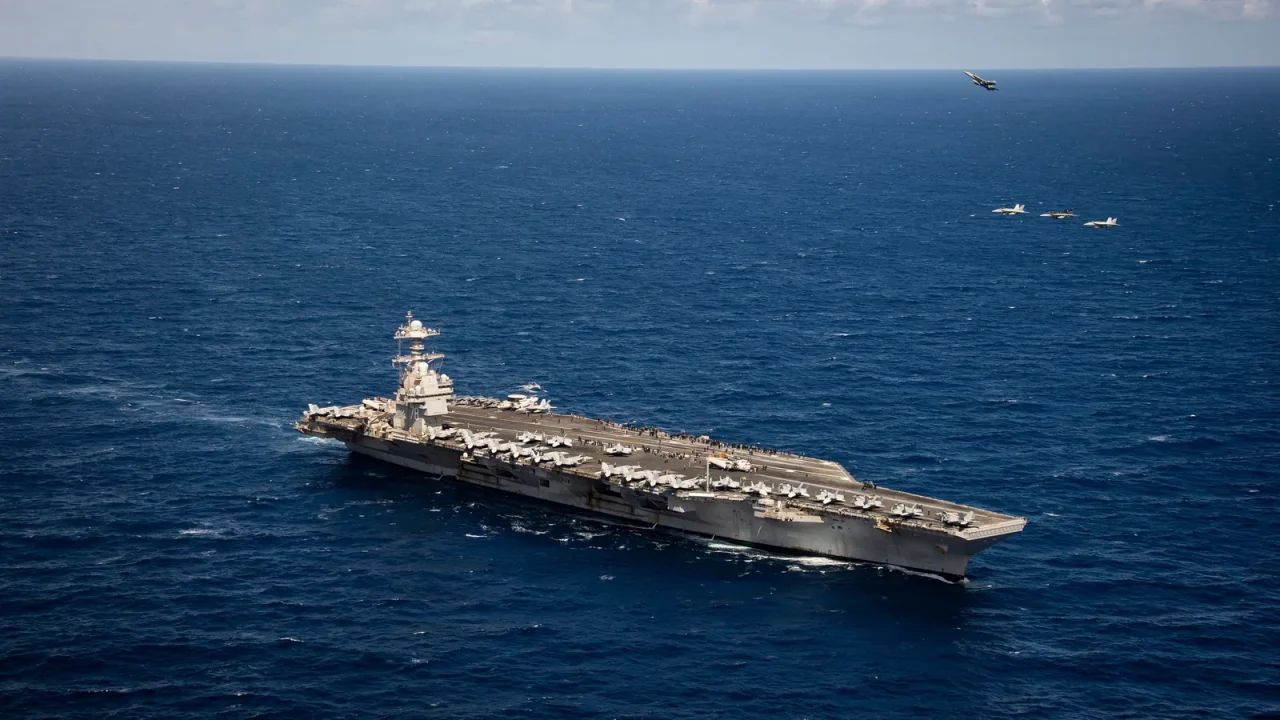
The United States Navy has 11 aircraft carriers in service right now. Ten are Nimitz-class ships. One is the newer USS Gerald R. Ford. All eleven are nuclear-powered, and no other country has anything close to that number.
That is the short answer. But if you have searched this before, you have probably seen other numbers too — 10, 12, 19, even 20. That is confusing, and it is not your fault. People count different ships in different ways.
This guide clears it up in plain English. You will get the full list of ships, where each one is based, why the number is 11, what is being built next, and how the U.S. compares with the rest of the world. No jargon, no guessing. ⚓
So, how many aircraft carriers does the US have?
Eleven. That is the number of full-size aircraft carriers that are commissioned, which simply means they are officially part of the Navy’s active fleet.
Every one of them is a “supercarrier”. That is not an official Navy term, but it is a useful one. It means a very large carrier — around 100,000 tons — that can launch and land regular fighter jets using catapults and arresting wires. Each ship is about 1,100 feet long. That is longer than three football fields laid end to end.
All eleven run on nuclear power. Two reactors heat water into steam, and the steam turns the propellers. Because of that, a carrier does not need to stop for fuel for itself. It can sail for more than 20 years before its reactors need new fuel. What it does need, regularly, is food, spare parts and jet fuel for its aircraft.
Every carrier has a hull number that starts with CVN. “CV” is the Navy’s code for an aircraft carrier. The “N” means nuclear-powered. So CVN-78 is nuclear aircraft carrier number 78.
The full list of US aircraft carriers in 2026
Here are all eleven ships, oldest to newest. The home port is where the ship and its crew are based when they are not deployed.
| Ship | Hull number | Class | In service since | Home port |
|---|---|---|---|---|
| USS Nimitz | CVN-68 | Nimitz | 1975 | Norfolk, Virginia |
| USS Dwight D. Eisenhower | CVN-69 | Nimitz | 1977 | Norfolk, Virginia |
| USS Carl Vinson | CVN-70 | Nimitz | 1982 | San Diego, California |
| USS Theodore Roosevelt | CVN-71 | Nimitz | 1986 | San Diego, California |
| USS Abraham Lincoln | CVN-72 | Nimitz | 1989 | San Diego, California |
| USS George Washington | CVN-73 | Nimitz | 1992 | Yokosuka, Japan |
| USS John C. Stennis | CVN-74 | Nimitz | 1995 | Newport News, Virginia (mid-life overhaul) |
| USS Harry S. Truman | CVN-75 | Nimitz | 1998 | Norfolk, Virginia |
| USS Ronald Reagan | CVN-76 | Nimitz | 2003 | Bremerton, Washington |
| USS George H.W. Bush | CVN-77 | Nimitz | 2009 | Norfolk, Virginia |
| USS Gerald R. Ford | CVN-78 | Ford | 2017 | Norfolk, Virginia |
A few things stand out when you look at the list.
- The fleet is split between two coasts. Roughly half the carriers are based on the East Coast in Virginia. The rest are on the West Coast in California and Washington.
- One carrier lives overseas. USS George Washington is based in Yokosuka, Japan. It is the only U.S. carrier with a permanent home port outside the United States.
- The oldest ship is more than 50 years old. USS Nimitz entered service in 1975. The Navy has kept it going longer than first planned — more on that below.
Ships move for maintenance and new assignments. USS Nimitz, for example, shifted from Washington State to Norfolk in 2026 ahead of its retirement. If you need a home port for something important — like planning to see a family member — check with the command, not a website.
Nimitz class vs. Ford class: what is the difference?
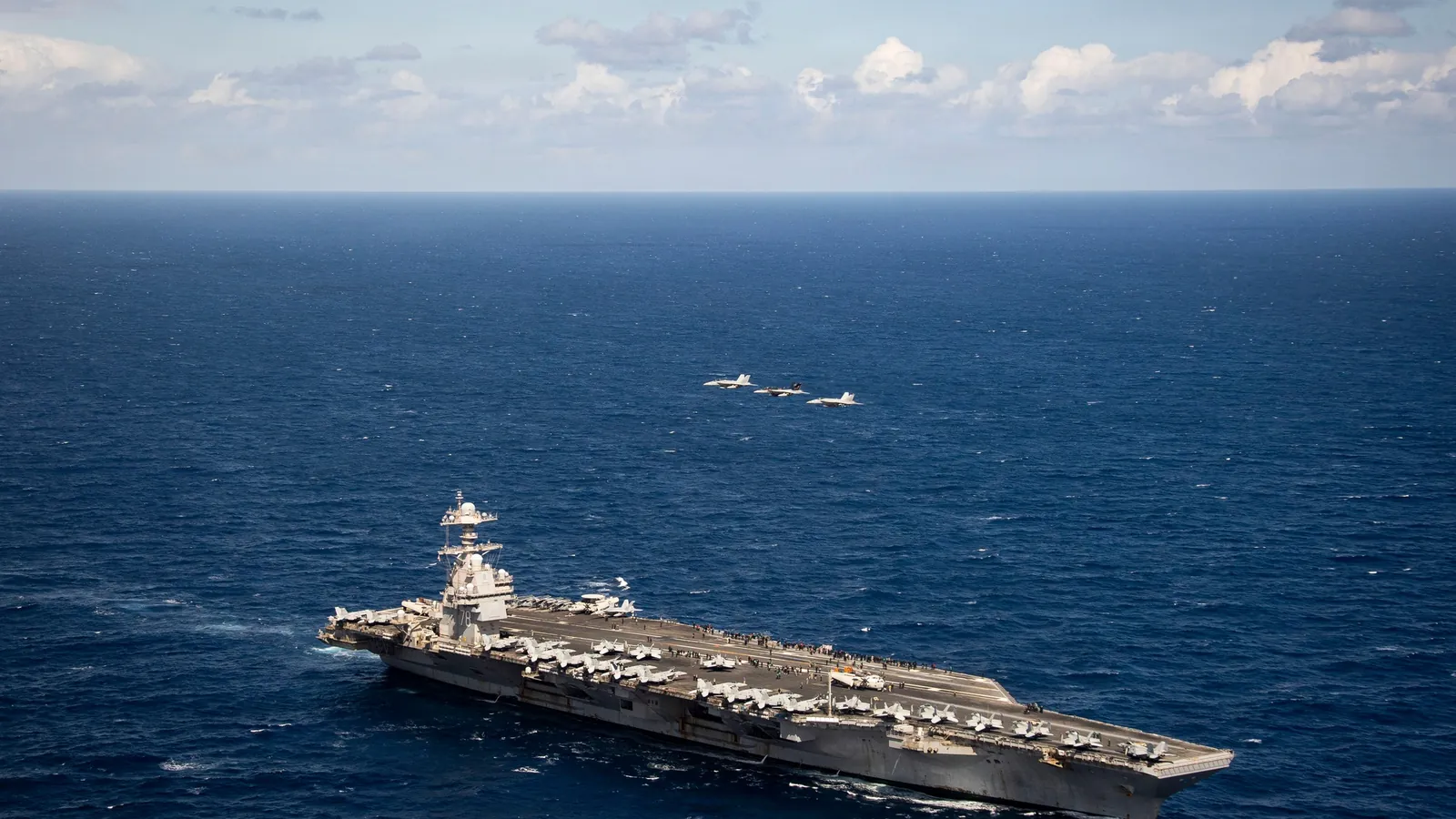
The U.S. has two types of carrier in service. Ten belong to the Nimitz class, a design from the 1970s that has been updated many times. One belongs to the Ford class, the first brand-new carrier design in about 40 years.
From a distance they look alike. Both are huge, both are nuclear-powered, and both carry dozens of aircraft. The differences are mostly in the technology inside.
| Feature | Nimitz class | Ford class |
|---|---|---|
| Ships in service | 10 | 1 (more being built) |
| First ship entered service | 1975 | 2017 |
| Length | About 1,092 feet | About 1,092 feet |
| Weight fully loaded | About 97,000 tons | About 100,000 tons |
| Top speed | More than 30 knots (about 35 mph) | More than 30 knots (about 35 mph) |
| How jets are launched | Steam catapults | Electromagnetic catapults (EMALS) |
| Aircraft carried | 60 or more | 75 or more |
| People on board | Roughly 5,000 with the air wing | Roughly 4,500 with the air wing |
Why the Ford class matters
The big change is how aircraft get off the deck. Nimitz-class ships fling jets into the air with steam catapults. Ford-class ships use magnets instead. The system is called EMALS, short for Electromagnetic Aircraft Launch System.
Why does that help? Magnetic launches are smoother, so they put less strain on each aircraft. They can also be dialed up or down, which means the same catapult can launch a heavy fighter or a lighter drone.
The Ford class also needs fewer sailors. Smarter design and more automation mean several hundred fewer people are required to run the ship. Over a 50-year life, that saves a great deal of money.
A carrier is not just a ship. It is a floating airport, a small city and a power station, all moving at 35 miles an hour.
Why 11? The law and the math behind the number
The number 11 is not a coincidence. It is written into U.S. law.
Title 10 of the U.S. Code says the Navy’s combat forces must include “not less than 11 operational aircraft carriers”. Congress put that floor in place so the fleet could not quietly shrink. If the Navy wants to drop below 11, even for a short time, it needs permission from Congress.
That has happened before. Between 2012 and 2017, the Navy had only 10 carriers. The old USS Enterprise had retired and USS Gerald R. Ford was not finished yet. Congress granted a temporary exception to cover the gap.
Why not fewer?
Here is the part most people miss. Having 11 carriers does not mean 11 carriers are out at sea. At any moment, most of them are not deployed.
A carrier’s life runs in a cycle. Think of it in rough thirds:
- Maintenance. The ship is in a shipyard being repaired and upgraded. Some of these periods last months. One of them — the mid-life overhaul — takes about four years.
- Training. The crew and the air wing practise together and work up to full readiness. This takes many months.
- Deployment. The ship is finally out on a mission, usually for six to nine months, sometimes longer.
So with 11 ships, the Navy can usually keep about three deployed, with a couple more able to head out quickly in an emergency. Cut the fleet much below 11 and that falls apart quickly.
Each nuclear carrier is built to last about 50 years. Around the halfway point it goes into dry dock for a Refueling and Complex Overhaul, or RCOH. Workers refuel the reactors and rebuild much of the ship. USS John C. Stennis has been going through this for several years, and USS Harry S. Truman is next in line. While a ship is in RCOH it still counts as one of the 11, but it cannot deploy.
What about the “other” carriers? Amphibious assault ships
This is where most of the confusion comes from. 🤔
Besides its 11 aircraft carriers, the Navy operates a second group of big, flat-topped ships. They are called amphibious assault ships. Their hull numbers start with LHA or LHD. There are about nine of them: the Wasp class and the newer America class.
They look like small aircraft carriers. They have a full-length flight deck. They carry helicopters, tilt-rotor Ospreys and F-35B fighter jets, which can take off in a short distance and land vertically.
So why does the Navy not call them aircraft carriers? Because their main job is different. They exist to carry Marines and put them ashore. They are about half the size of a supercarrier. They have no catapults, so they cannot launch the Navy’s heavier jets or its radar planes.
| Aircraft carrier (CVN) | Amphibious assault ship (LHA/LHD) | |
|---|---|---|
| How many | 11 | About 9 |
| Main job | Launch air power at sea | Carry and land Marines |
| Size | About 100,000 tons | About 40,000 to 45,000 tons |
| Power | Nuclear | Conventional fuel |
| Catapults | Yes | No |
| Typical aircraft | 60 to 75+, including fighters and radar planes | Helicopters, Ospreys and F-35B jets |
| Counted as an aircraft carrier? | Yes | No |
If a website tells you the U.S. has 19 or 20 aircraft carriers, it is adding these two groups together. That is not wrong, exactly — in many other navies, a ship that size would be called a carrier. But it is not how the U.S. Navy counts.
11 carriers for jets. About 9 amphibious ships for Marines. Together, roughly 20 big-deck ships that can fly aircraft.
New carriers on the way — and one about to retire
The fleet is in the middle of a slow handover. The Nimitz class is starting to retire, one ship at a time, and the Ford class is replacing it, one ship at a time.
| Ship | Hull number | Status in late 2026 |
|---|---|---|
| USS John F. Kennedy | CVN-79 | Built and on sea trials. Delivery to the Navy is planned for March 2027. |
| USS Enterprise | CVN-80 | Under construction. Expected around the end of the decade. |
| USS Doris Miller | CVN-81 | Early construction. Expected in the early 2030s. |
| USS William J. Clinton | CVN-82 | Named and planned. |
| USS George W. Bush | CVN-83 | Named and planned. |
What is happening with USS Nimitz?
USS Nimitz was due to leave service in May 2026 after more than 50 years. But its replacement, USS John F. Kennedy, was running late. Retiring Nimitz on time would have dropped the fleet to 10 ships and broken the 11-carrier law.
So in March 2026 the Navy extended Nimitz’s service to March 2027. That lines up with the planned delivery of John F. Kennedy. The idea is a clean swap: one old carrier out, one new carrier in, and the total stays at 11.
Shipbuilding schedules move, often by months. If you are reading this well after October 2026, check the latest news before you quote a delivery or retirement date. We list reliable places to check further down.
Does the US have aircraft carriers in reserve?
No. This is a common belief, but there is no fleet of spare carriers sitting in storage ready to be brought back.
When a carrier retires, it is taken apart. The older oil-powered carriers have been sold for scrap. The first nuclear carrier, the former USS Enterprise (CVN-65), left service years ago and is waiting to be dismantled, which is a slow and careful job because of its reactors.
A handful of older carriers did get a happier ending. They became museums that you can walk through today:
- USS Midway — San Diego, California
- USS Intrepid — New York City
- USS Yorktown — Mount Pleasant, South Carolina
- USS Lexington — Corpus Christi, Texas
- USS Hornet — Alameda, California
Visiting one is the best way to understand just how big these ships are. Standing on a flight deck tells you more than any number in a table.
How the US compares with the rest of the world
Short version: nobody else is close.
Counting carriers worldwide is tricky, because countries do not agree on what counts. Some ships carry fighter jets. Some carry only helicopters. Some are being converted. The table below sticks to ships that operate, or are being prepared to operate, fixed-wing jets.
| Country | Jet-capable carriers | Good to know |
|---|---|---|
| United States | 11 | All nuclear-powered supercarriers |
| China | 3 | The newest, Fujian, entered service in late 2025 |
| United Kingdom | 2 | HMS Queen Elizabeth and HMS Prince of Wales |
| India | 2 | INS Vikramaditya and INS Vikrant |
| Italy | 2 | Cavour and Trieste |
| Japan | 2 | Izumo and Kaga, being adapted to fly F-35B jets |
| France | 1 | Charles de Gaulle, the only nuclear carrier outside the U.S. |
| Spain | 1 | Juan Carlos I, an amphibious ship that also flies Harrier jets |
| Russia | 0 active | Its one carrier, Admiral Kuznetsov, has been out of service for years |
Two things make the American fleet stand out, beyond the raw number.
Size. A U.S. supercarrier is about 100,000 tons. Most other countries’ carriers are between a quarter and two-thirds of that. Bigger ships carry more aircraft, more fuel and more weapons, and they can fly more missions each day.
Experience. The U.S. Navy has been flying jets from carriers without a break for many decades. Running a busy flight deck safely is a skill that takes generations to build. That know-how is as valuable as the ships themselves.
What does an aircraft carrier actually do?
A carrier’s job is to bring air power to places where the U.S. has no nearby airfield. It can park in international waters and fly missions without asking any country for permission to use a base.
A carrier never sails alone. It travels in a group called a Carrier Strike Group:
- The aircraft carrier — the centre of the group.
- The carrier air wing — roughly 65 to 75 aircraft, including fighters, electronic-attack jets, radar planes and helicopters.
- Destroyers and often a cruiser — to protect the carrier from aircraft, missiles and submarines.
- A supply ship — to deliver fuel, food and ammunition at sea.
- Often a submarine — working quietly nearby.
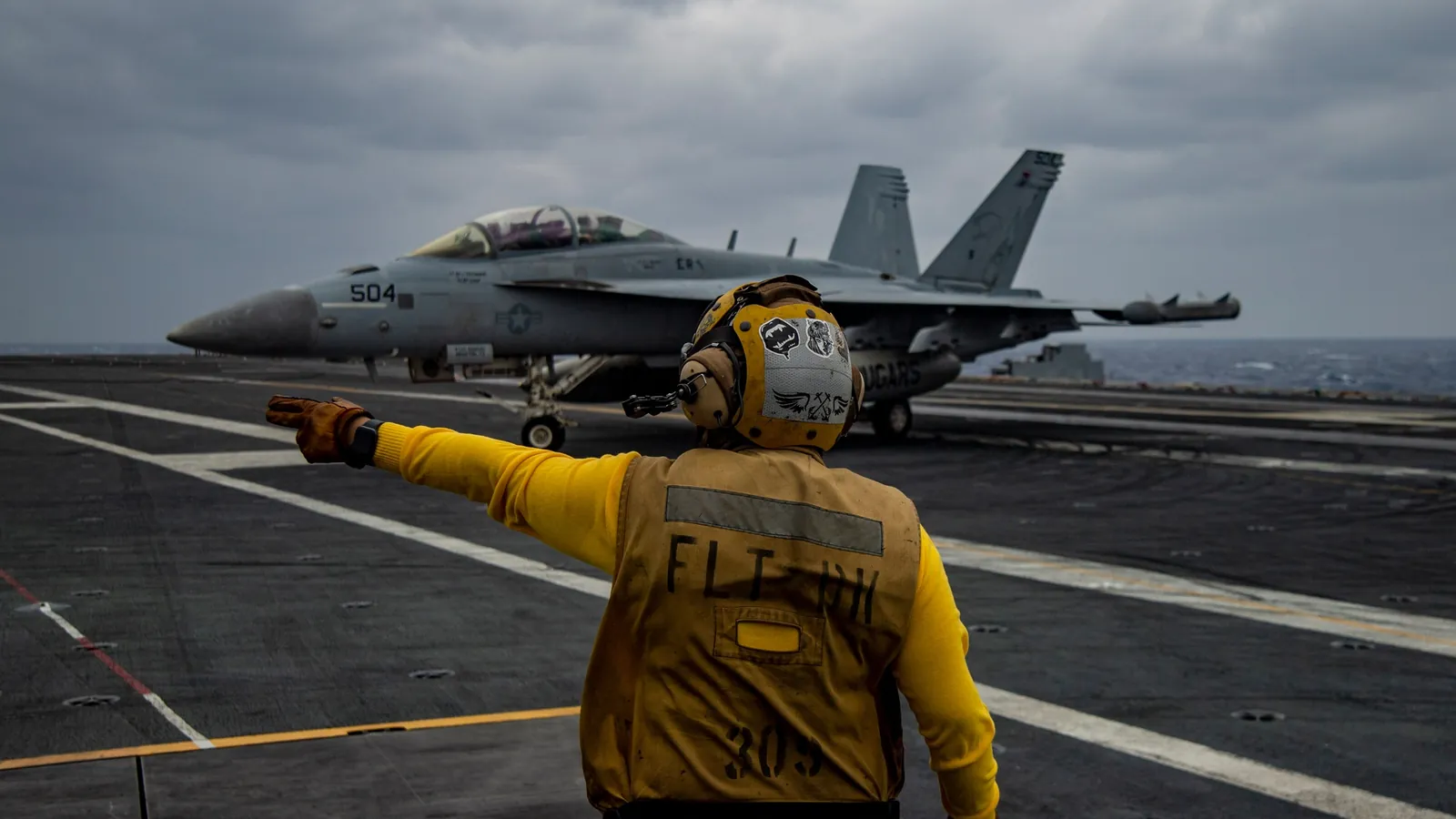
What is it like to serve on one?
Around 5,000 people live and work on a deployed carrier. Pilots are a small share of that. Most of the crew are sailors who cook, fix engines, run the reactors, load weapons, handle aircraft on deck, treat patients and keep the ship supplied.
If you are curious about the day-to-day — where sailors sleep, what the food is like, how they stay in touch with home — read our guide to life on a Navy ship. And if a carrier has you thinking about joining, start with how to join the Navy and our Navy Career Explorer.
Real-life situations where this number comes up
You might be surprised how often people need a straight answer to this. Here are four situations readers commonly find themselves in.
1. The argument at the dinner table
Someone says the U.S. has 20 aircraft carriers. Someone else says 11. Both are sure. The answer: they are counting different things. Eleven is the number of true aircraft carriers. Twenty is what you get if you add the amphibious assault ships. Now you can settle it without anyone losing face.
2. The family with a sailor on a carrier
Your son or daughter gets orders to a carrier, and suddenly you want to understand everything about it. Knowing which ship, which class and which home port helps you picture their life. It also helps to know that a carrier in overhaul is not going to sea — so “assigned to a carrier” does not always mean “deploying soon”.
3. The student writing a report
School projects and essays need facts that hold up. Use the table in this guide, then confirm the number against an official source before you hand it in. Teachers notice when a figure comes with a reliable source and a date.
4. The future sailor
If you are thinking about enlisting, there is a real chance you will serve on one of these ships. Thousands of sailors do. Knowing how the fleet is laid out — and which coast most carriers call home — makes conversations with a recruiter more useful.
Common mistakes people make (and the fix for each)
⚠️ Mistake: Saying the U.S. has 20 aircraft carriers.
✅ Fix: Say 11 aircraft carriers, plus about 9 amphibious assault ships that also fly aircraft.
⚠️ Mistake: Assuming all 11 are at sea.
✅ Fix: Only a few are deployed at once. The rest are training or in maintenance.
⚠️ Mistake: Trusting an old article.
✅ Fix: Check the date. Numbers and retirement plans change. Anything written before 2026 will not know about the Nimitz extension.
⚠️ Mistake: Thinking there are spare carriers in storage.
✅ Fix: There is no reserve carrier fleet. Retired carriers are scrapped or become museums.
⚠️ Mistake: Mixing up the two ships named John F. Kennedy or Enterprise.
✅ Fix: Use the hull number. CVN-79 is the new Kennedy. CVN-80 is the new Enterprise. The older ships with those names have retired.
⚠️ Mistake: Counting ships that are still being built.
✅ Fix: A carrier counts once it is commissioned. Until then it is a “pre-commissioning unit”.
Pro tips: how to check the number yourself
Fleet numbers do change. Here is how to get a current, trustworthy answer in a couple of minutes.
- Start with the Naval Vessel Register. This is the Navy’s official list of every ship it owns. It shows each ship’s status and home port.
- Read the Navy’s fact file on aircraft carriers. It gives the official specifications for each class in plain language.
- Use a fleet tracker for news. USNI News publishes a regular “Fleet and Marine Tracker” showing roughly where carriers are operating.
- Look at the date on anything you read. If it is more than a year old, treat the numbers as a starting point, not the final word.
- Be careful with exact locations. The Navy does not publish the precise position of deployed ships, for good reason. If a site claims to, be sceptical.
If someone you love is serving on a carrier, avoid sharing ship movements, port visits or return dates online. The Navy calls this operational security. Your sailor’s command will tell families what is safe to share.
Want to go deeper? Books, a model and a gift worth a look
If this guide has sparked your interest, these four picks are a good next step. We chose them by researching what each one covers and who it suits. We have not tested them hands-on, and we tell you where each one falls short. You can read how we choose products.
| Product | Best for | Key feature | Price level | Link |
|---|---|---|---|---|
| Best first readCarrier: A Guided Tour of an Aircraft Carrier | Understanding how a carrier works | A walk through the ship, its people and its aircraft | Budget | See on Amazon (opens in a new tab) |
| Best illustrated guideUS Super Carrier Operations Manual | Visual learners and ship fans | Large-format photos and diagrams | Mid-range | See on Amazon (opens in a new tab) |
| Best hands-on projectTrumpeter 1/700 USS Nimitz Model Kit | Model builders aged 14 and up | A detailed kit about 18 inches long when built | Mid-range | See on Amazon (opens in a new tab) |
| Best small giftUSS Gerald R. Ford CVN-78 Cap | Sailors, veterans and families | Embroidered ship patch, adjustable fit | Budget | See on Amazon (opens in a new tab) |
Price level is a broad guide, not a live price. Scroll the table sideways on small screens.
Carrier: A Guided Tour of an Aircraft Carrier
Budget
Tom Clancy is best known for thrillers, but this is non-fiction. He walks you through a Nimitz-class carrier deck by deck: how the ship is built, who does what, and how the air wing fights. It reads easily and assumes no background.
Ideal for: Anyone who wants to understand how an aircraft carrier really works, explained by a great storyteller.
- Clear tour of the ship from keel to flight deck
- Explains the jobs of the crew and air wing
- Written for general readers, not experts
- Author
- Tom Clancy
- Format
- Paperback
- Length
- 348 pages
- First published
- February 1999
- Series
- Tom Clancy's Military Reference
What we like
- Easy and enjoyable to read
- Explains the why, not just the what
- Inexpensive in paperback
Trade-offs
- Published in 1999, so it does not cover the Ford class or the F-35
- Few colour photographs
- Some aircraft described have since retired
US Super Carrier: Operations Manual
Mid-range
A large-format hardcover from Haynes, the publisher famous for car repair manuals. It covers the design, departments, flight operations and daily life aboard U.S. supercarriers, with photographs and cutaway-style diagrams on almost every page.
Ideal for: Visual learners, ship enthusiasts and anyone buying a gift for a Navy fan.
- Covers all U.S. supercarrier types
- Sections on flight operations and life on board
- Heavily illustrated
- Authors
- Chris McNab and Patrick Bunce
- Format
- Hardcover
- Length
- 188 pages
- Published
- August 2020
- Page size
- 11 x 8.5 inches
What we like
- Excellent photos and diagrams
- Newer than most carrier books
- Works as a coffee-table book
Trade-offs
- Published in 2020, so recent fleet changes are missing
- Stock can run low
- Costs more than a paperback
Trumpeter 1/700 USS Nimitz CVN-68 Model Kit
Mid-range
A plastic kit of the lead ship of the Nimitz class. At 1/700 scale the finished model is about 18 inches long, which is big enough to show real detail but small enough for a shelf. Building one teaches you the layout of a carrier better than any diagram.
Ideal for: Hobbyists and older teens who enjoy a patient, detailed build.
- Ready-to-assemble plastic kit
- Includes hundreds of pieces
- Glue and paint are not included
- Brand
- Trumpeter
- Scale
- 1/700
- Type
- Unassembled plastic model kit
- Recommended age
- 14 and up
- Box size
- about 19 x 5 x 3 inches
What we like
- A manageable size for display
- Detailed flight deck and island
- A rewarding long project
Trade-offs
- You must buy glue, paint and tools separately
- Small parts make it a poor choice for young children
- Not a beginner kit
USS Gerald R. Ford CVN-78 Embroidered Cap
Budget
A navy-blue ball cap with an embroidered USS Gerald R. Ford patch and the ship's silhouette. Ship caps like this are a familiar sight on sailors, veterans and proud parents. The seller describes itself as a veteran-owned business.
Ideal for: A sailor serving on the Ford, a veteran, or a family member who wants to show support.
- Embroidered patch rather than a print
- Adjustable to fit most adults
- Caps for other ships are sold separately
- Material
- 100% cotton
- Colour
- Navy blue
- Fit
- Adjustable
- Design
- Embroidered ship patch with silhouette
- Care
- Hand wash only
What we like
- Affordable and easy to post
- A personal gift when it matches their ship
- Sold by a veteran-owned business
Trade-offs
- Hand wash only
- Fan merchandise, not an official uniform item
- One colour
Buying for a sailor?
See our full list of practical gifts that fit in a seabag and get used every day.
Frequently asked questions
How many aircraft carriers does the US have in 2026?
Eleven. Ten are Nimitz-class carriers and one is the Ford-class USS Gerald R. Ford. All eleven are nuclear-powered.
Why do some websites say the US has 20 aircraft carriers?
They are adding the Navy’s amphibious assault ships to the count. Those ships have flat decks and fly F-35B jets and helicopters, but the Navy classes them as amphibious ships, not aircraft carriers.
How many aircraft carriers are there in the world?
It depends on what you count. Looking only at ships that fly fixed-wing jets, there are about two dozen worldwide, and the United States operates nearly half of them. If you include helicopter carriers, the total is roughly double that.
Does the US have any aircraft carriers in reserve?
No. There is no reserve fleet of carriers ready to return to service. Retired carriers are dismantled, and a few older ones have become museums.
What is the newest US aircraft carrier?
USS Gerald R. Ford (CVN-78), which entered service in 2017. The next one, USS John F. Kennedy (CVN-79), is planned to be delivered in March 2027.
How many people serve on an aircraft carrier?
Around 5,000 on a deployed Nimitz-class ship, counting the ship’s crew and the air wing. The Ford class needs several hundred fewer.
Your quick-reference checklist
Keep these points handy and you will never be caught out by this question again.
- The number is 11 — ten Nimitz-class and one Ford-class.
- All 11 are nuclear-powered and about 1,100 feet long.
- The law sets 11 as the minimum.
- About 9 amphibious assault ships also fly aircraft, but are counted separately.
- Only a few carriers are deployed at any one time.
- USS Nimitz is due to retire in March 2027, as USS John F. Kennedy arrives.
- There are no carriers in reserve.
- Check the Naval Vessel Register for the current official list.
Aircraft carriers are some of the most complex machines people have ever built, and the United States operates far more large ones than any other country. Now you know the number, why it is what it is, and how to check it for yourself. Fair winds. ⚓
Sources
Facts last checked against these sources: October 2026.
- U.S. Navy Fact File — Aircraft Carriers (CVN): official specifications for the Nimitz and Ford classes.
- Naval Vessel Register: the official inventory of U.S. Navy ships and their status.
- 10 U.S. Code § 8062: the requirement for not less than 11 operational aircraft carriers.
- USNI News, March 14, 2026: Navy extends USS Nimitz to 2027, in line with John F. Kennedy’s delivery.
- USNI News, July 7, 2025: delay to the delivery of John F. Kennedy (CVN-79).
- Stars and Stripes, March 9, 2026: where the 11 U.S. carriers are and what they are doing.